 Fraunhofer Institute for Production Systems and Design Technology
There are many paths to circularity. Researchers at Fraunhofer IPK use simple metrics to show which approaches are truly suitable for a company.
more info
There are many paths to circularity. Researchers at Fraunhofer IPK use simple metrics to show which approaches are truly suitable for a company.
more info
Additive manufacturing with recycled material? Both equipment manufacturers and end users place high demands on powder quality. Research projects at Fraunhofer IPK show that these can be met with solutions beyond conventional processes.
more info
Is your refrigerator or washing machine broken? Our researchers are developing an assistance system to determine whether a repair is worthwhile or if the appliances need to be recycled.
more info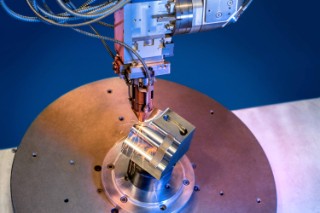
By combining Scangineering and additive repair technologies, tools or components can be repaired automatically – an exciting field of application for the reverse engineering technology made by Fraunhofer IPK.
more info
With simulation models, products can be better analyzed and developments predicted. A research team has developed an AI-based decision support system which increases proess efficiency.
more info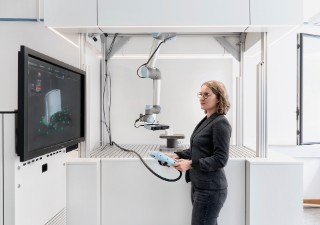
From the physical object to the point cloud and finally the CAD model – reverse engineering means a great deal of work. A team from Fraunhofer IPK aims to change that with an AI solution.
more info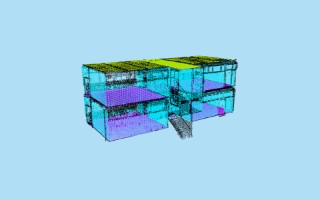
Existing buildings are responsible for one third of all carbon emissions in Germany. In order to renovate them efficiently on the basis of 3D models, the Scangineering process is being adapted.
more info
The Green Deal, the EU Action Plan for the Circular Economy, and the Ecodesign Regulation – for policymakers, the transition to a circular economy is a done deal. But this transformation requires expertise. How can SMEs adapt to it?
more info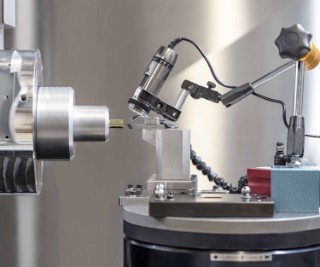
Ultra-precision machining is the ultimate in manufacturing technology – it hardly gets any more accurate than this.
more info
When it comes to mRNA vaccines or nanoemulsions, tiny differences in the mixing process determine efficacy and costs. FDmiX demonstrates how laboratory and production scale can be combined without compromising quality.
more info